Questions from Left-Behind Children
Part of Experiences of the Countryside
- Year
- 2019–2022
- Medium
- Other
- Dimensions
- Dimensions variable
In 2019, I joined a company-organised volunteer teaching programme at a secondary school in a mountainous ethnic minority region of Guangdong. Before arriving, we were repeatedly reminded not to describe the visit as “poverty alleviation,” in order to protect the students’ dignity. The school had new buildings, classrooms equipped with large interactive screens, and facilities approaching those of many urban schools. At first, it did not appear to be a place in need of assistance.
During our conversations with the students, another reality gradually emerged. Many still used bicycles associated with life in Chinese villages decades earlier, and their experience remained largely confined to the surrounding mountains. When asked where they had travelled beyond the area, only one student in the class raised a hand. Although the school’s physical infrastructure had improved, many children still lived apart from parents who had migrated elsewhere for work, with limited access to the world beyond their community.
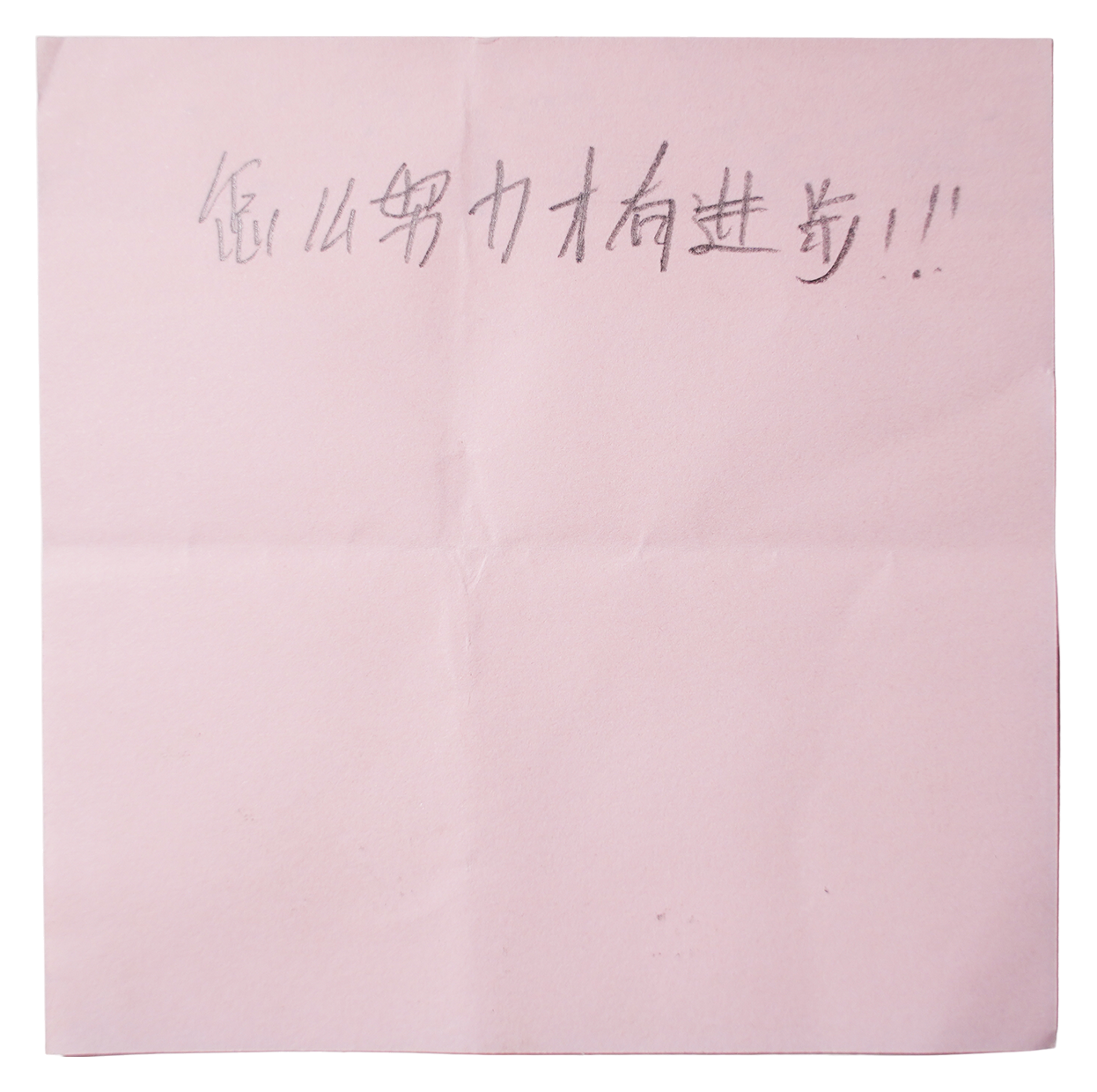
The purpose of the visit was to encourage the students to study, change their circumstances, and discover a wider world. Yet they already knew the expected language. When asked how they might improve their lives, they answered together: “Study hard.” The school regularly received similar volunteer groups, and our stories about education, work, and personal ambition may have sounded like another familiar script.
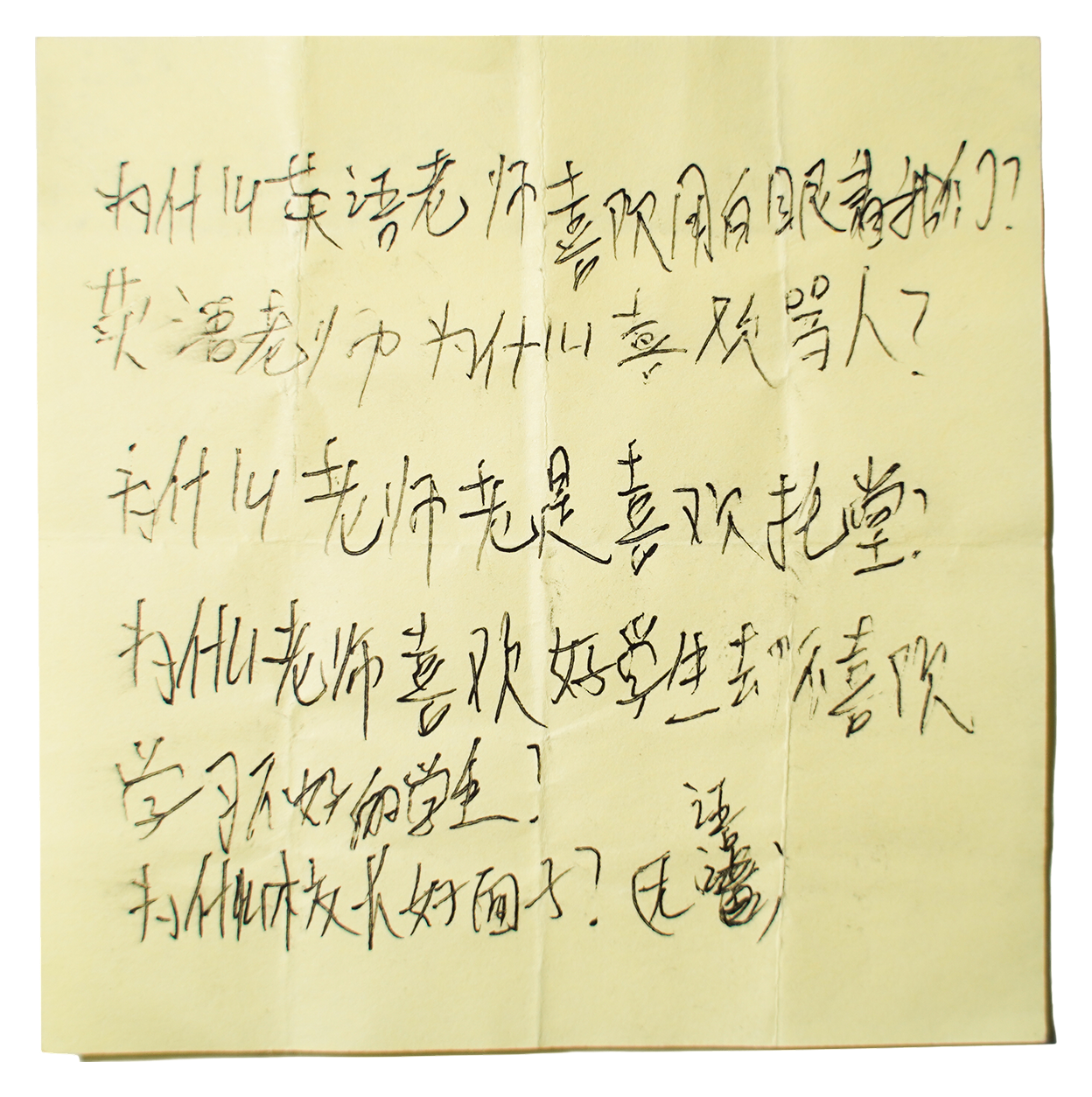
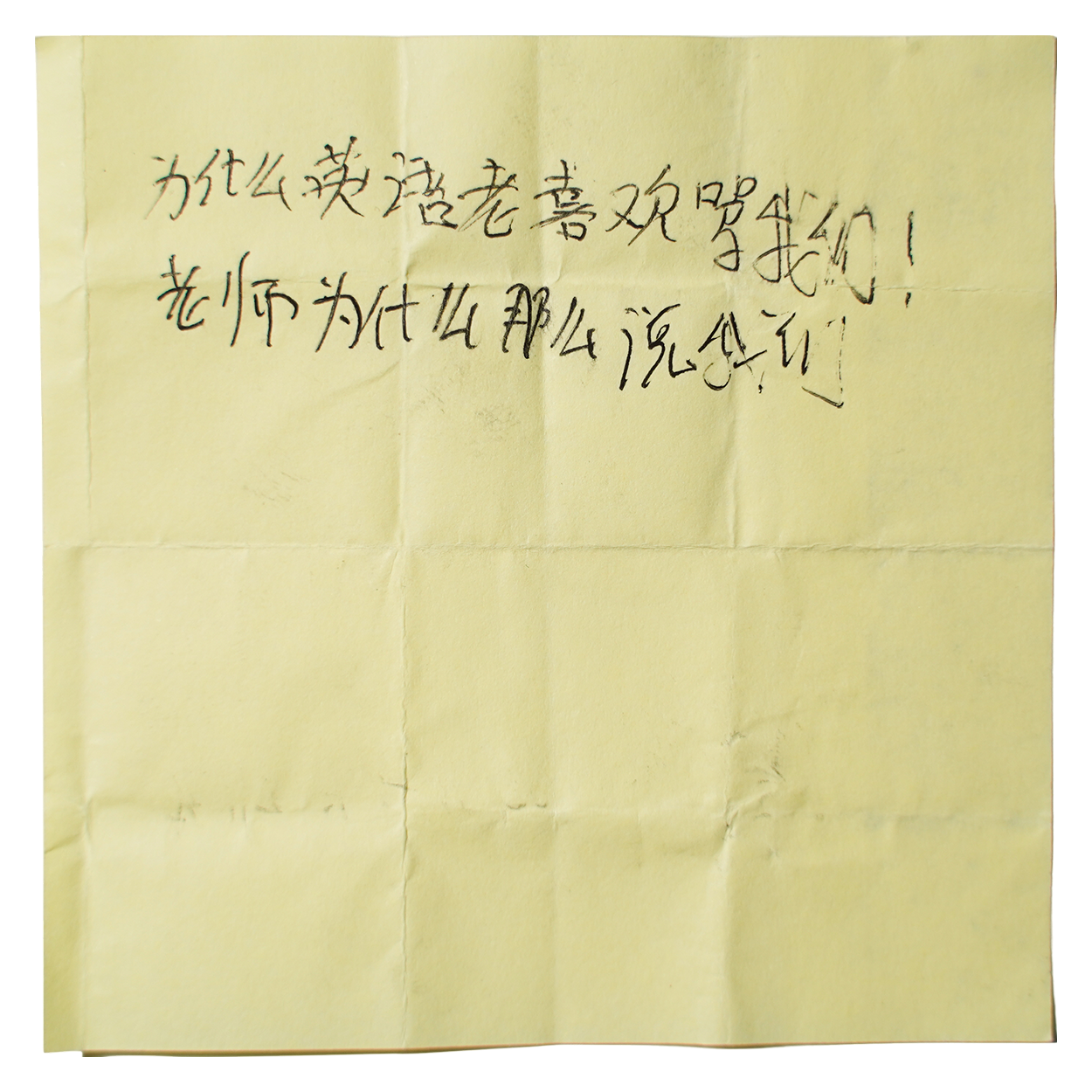
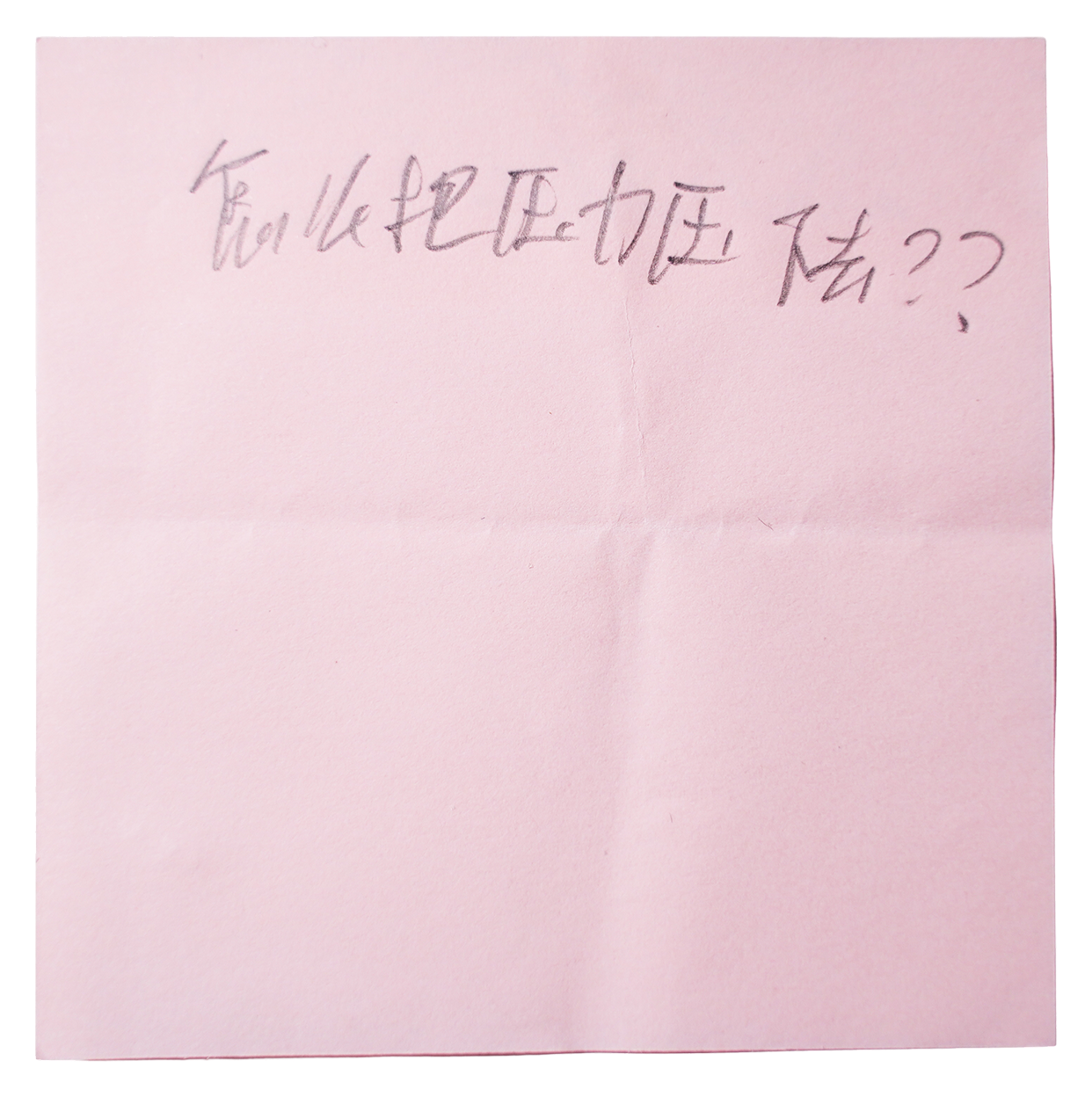
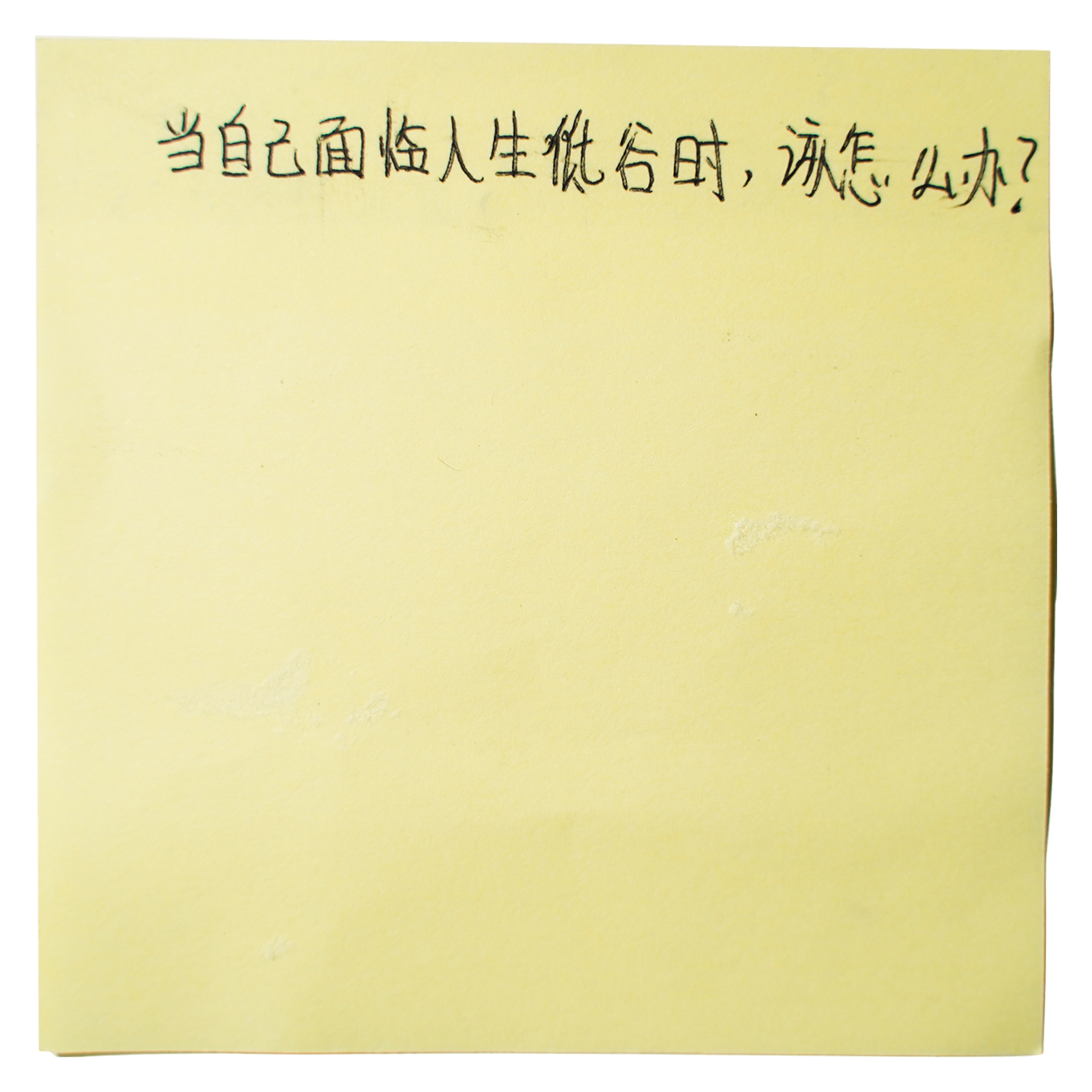
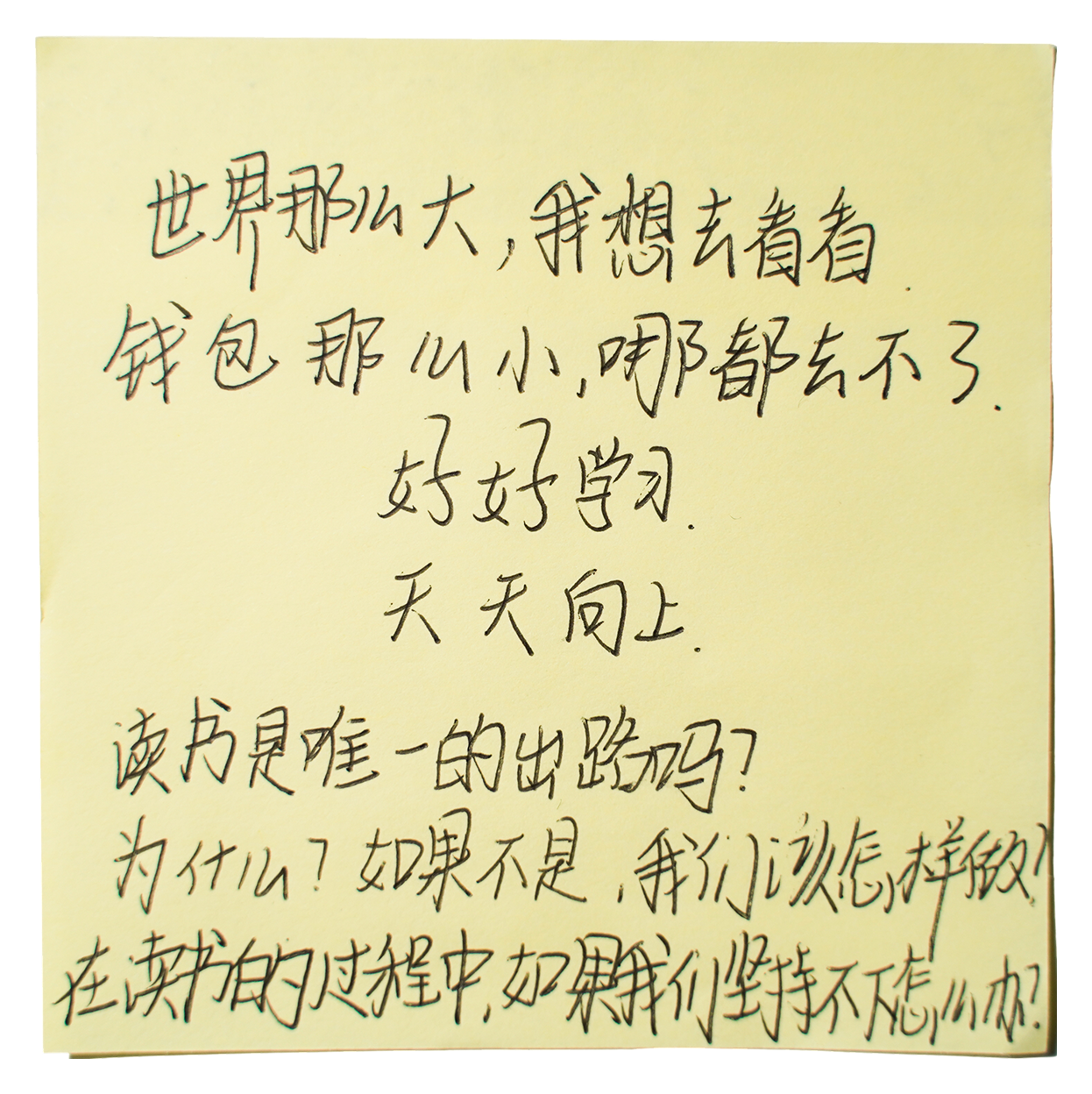
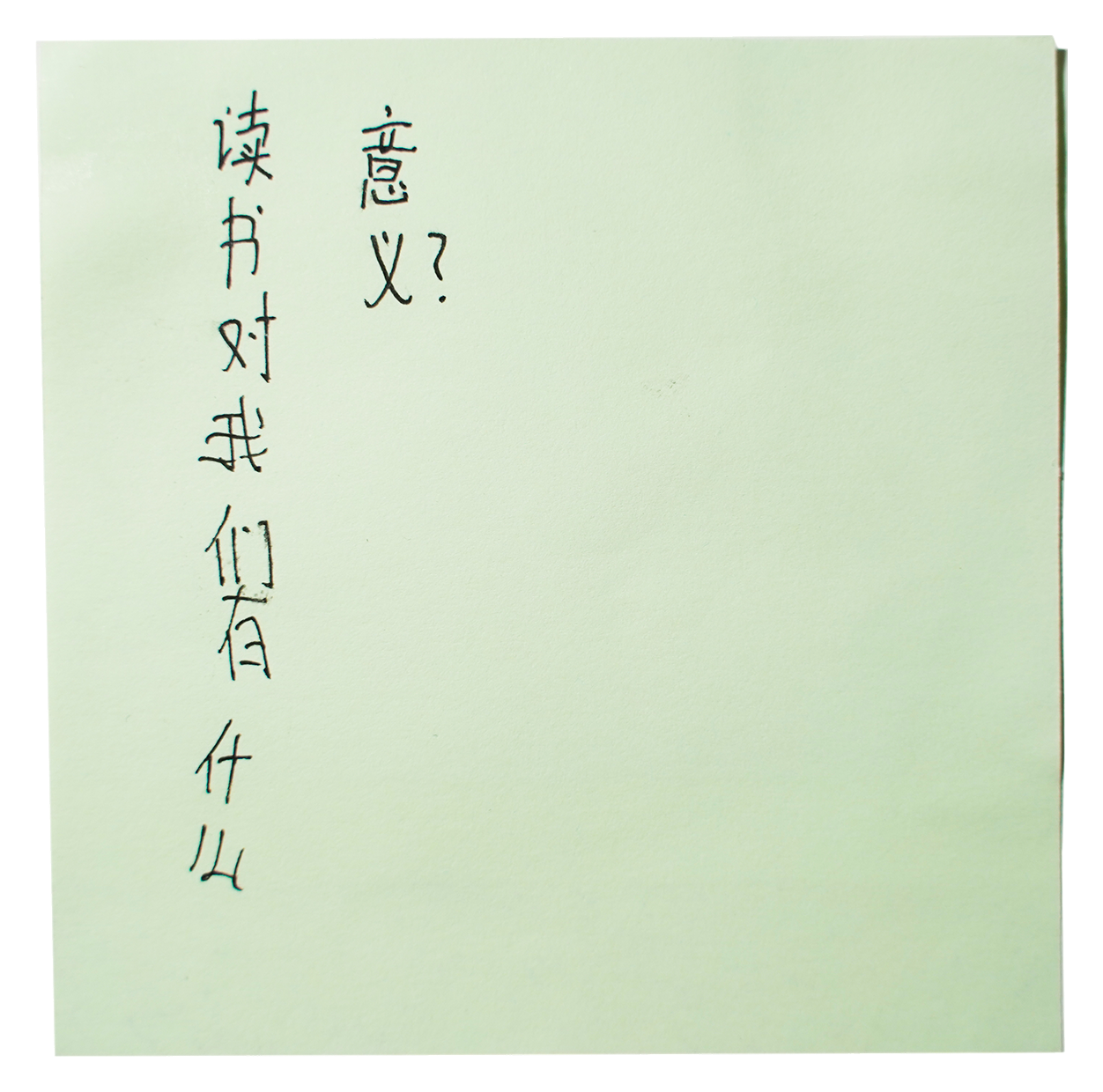
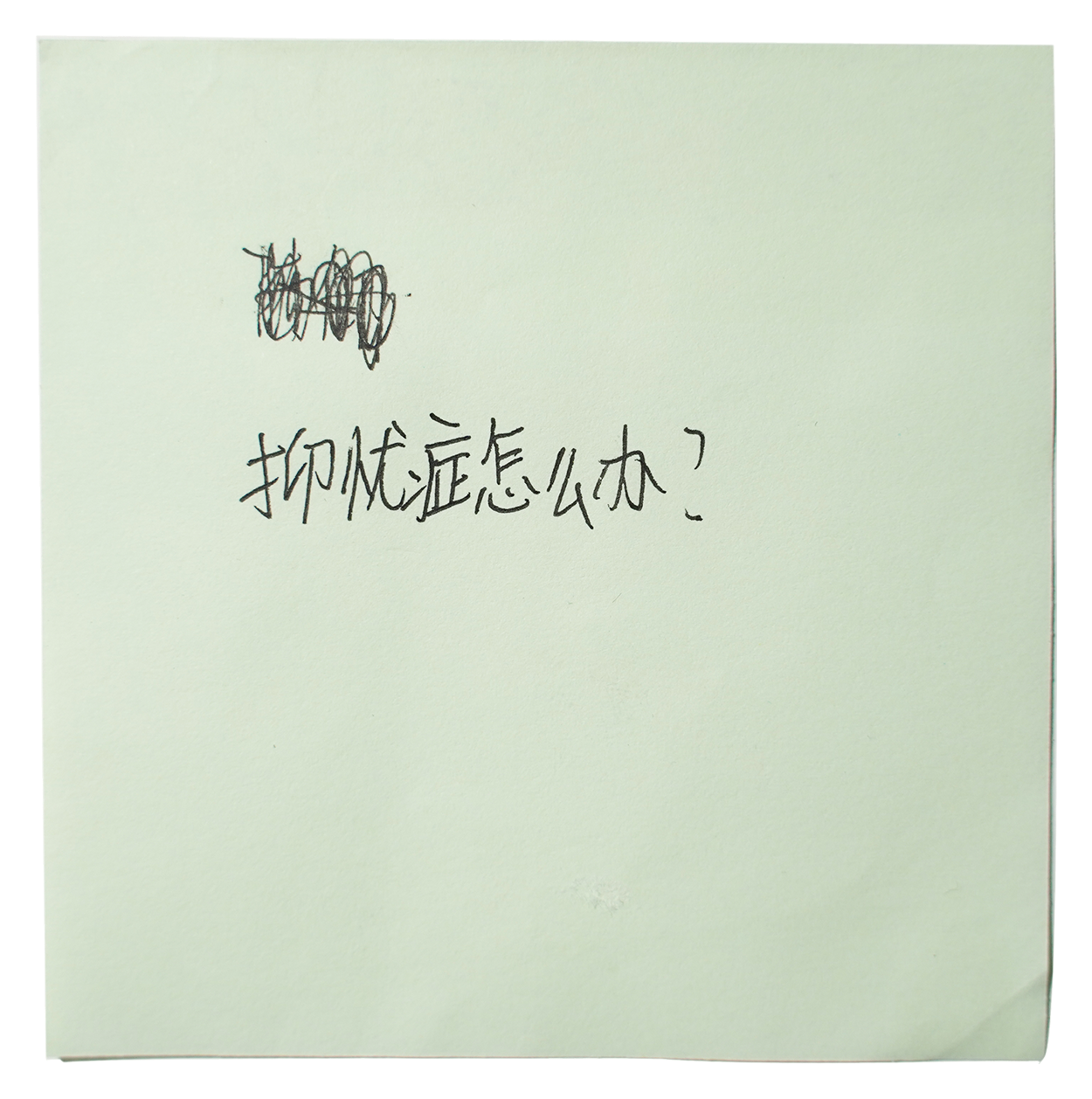
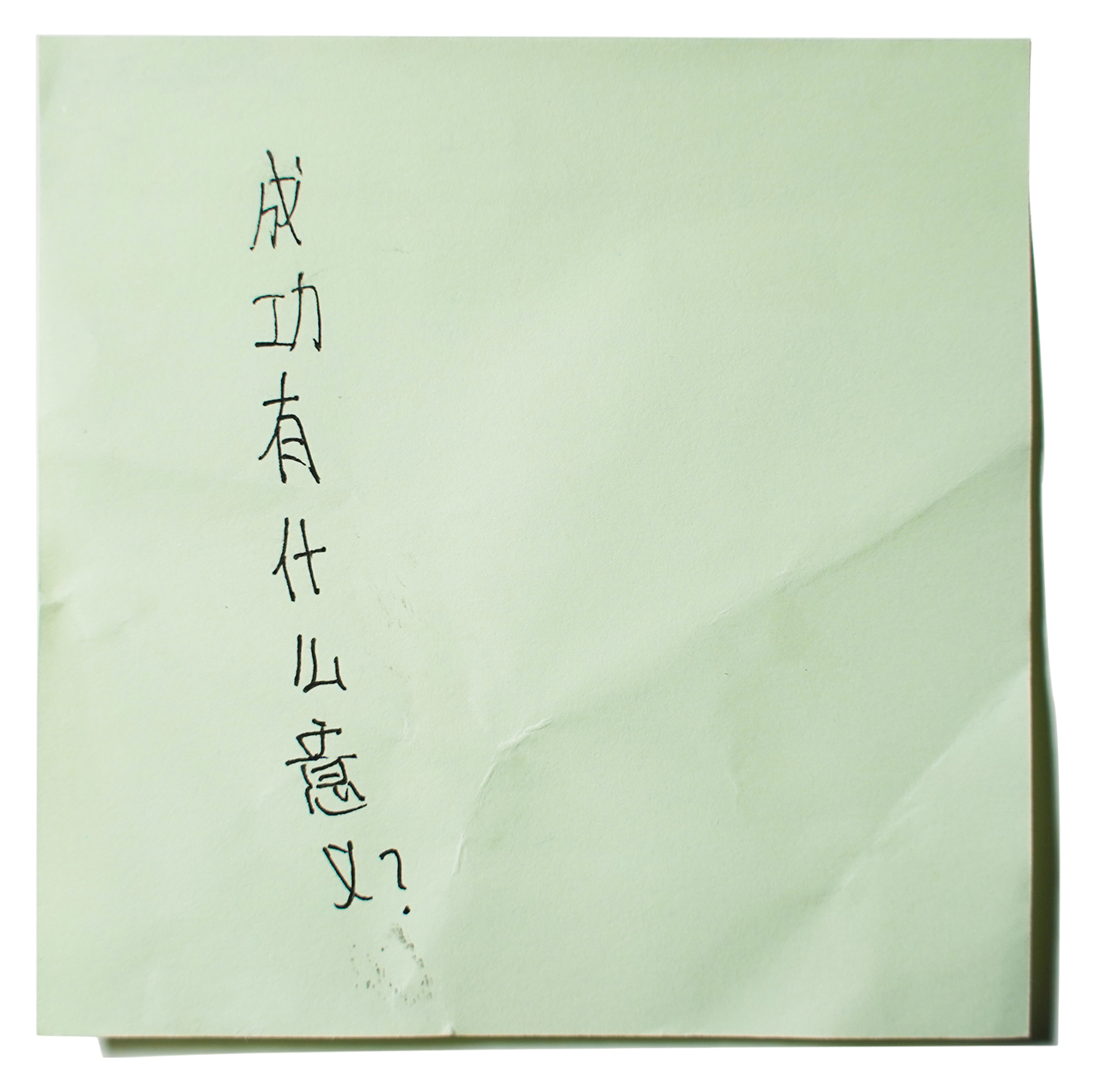
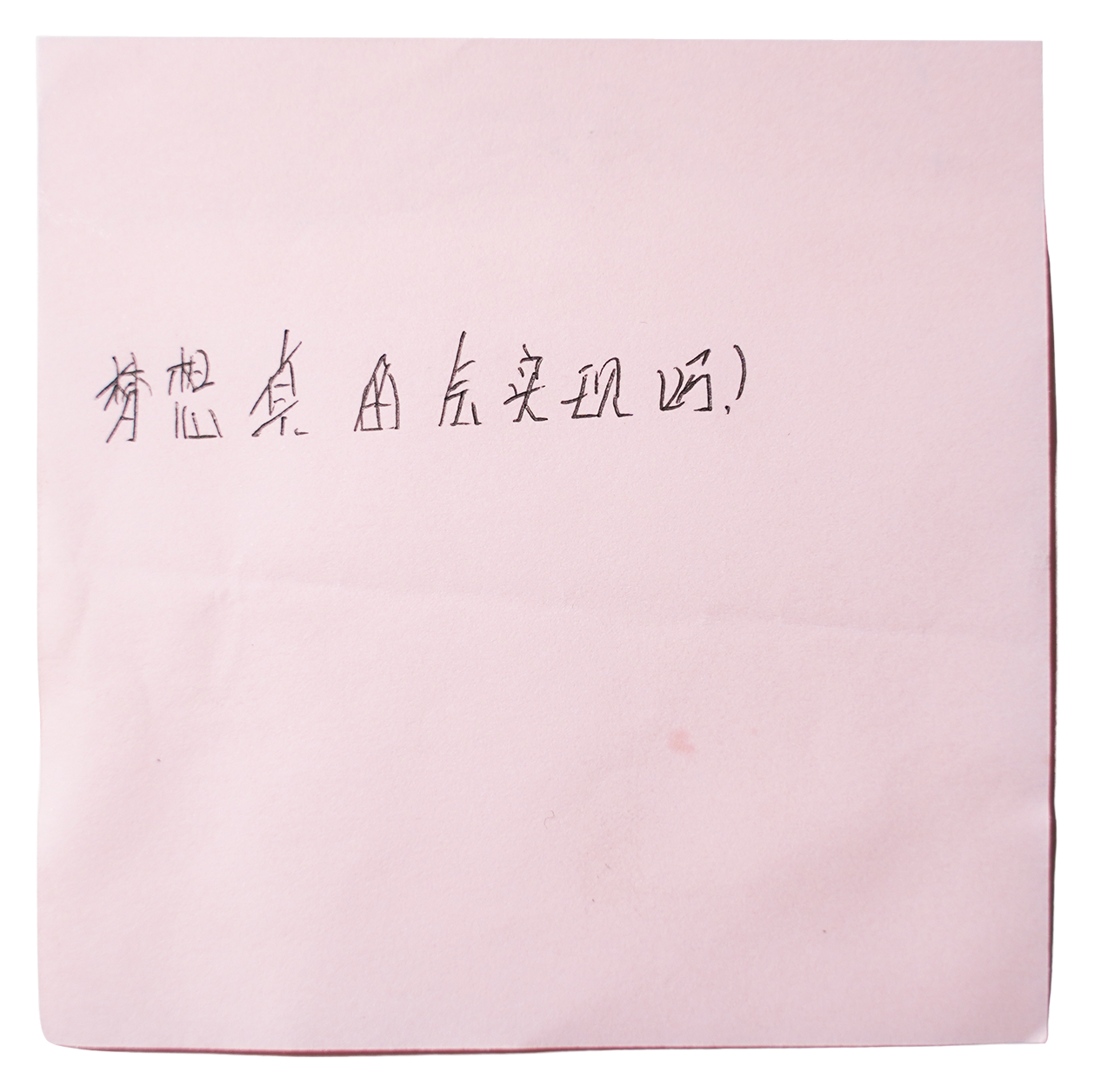
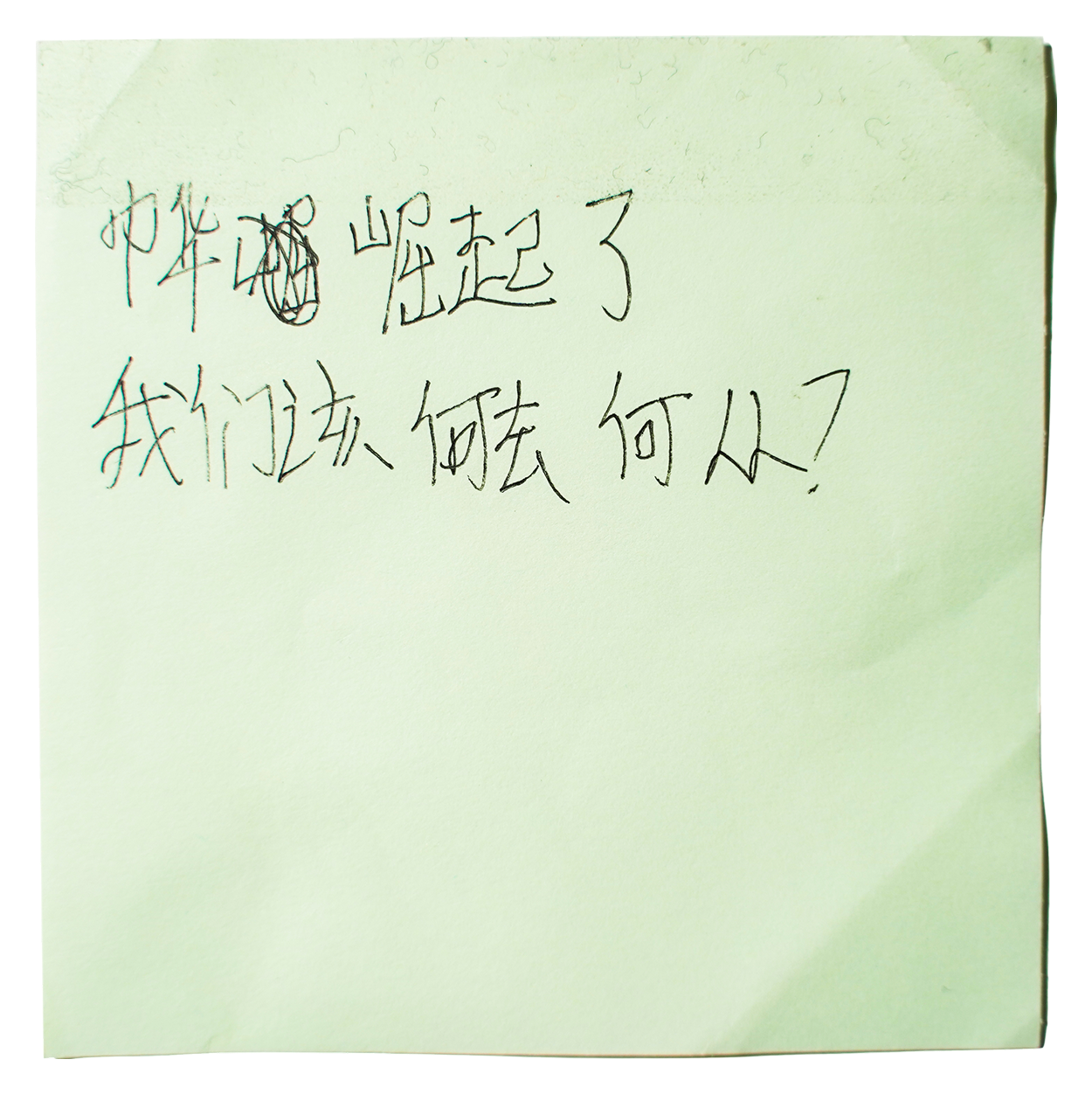
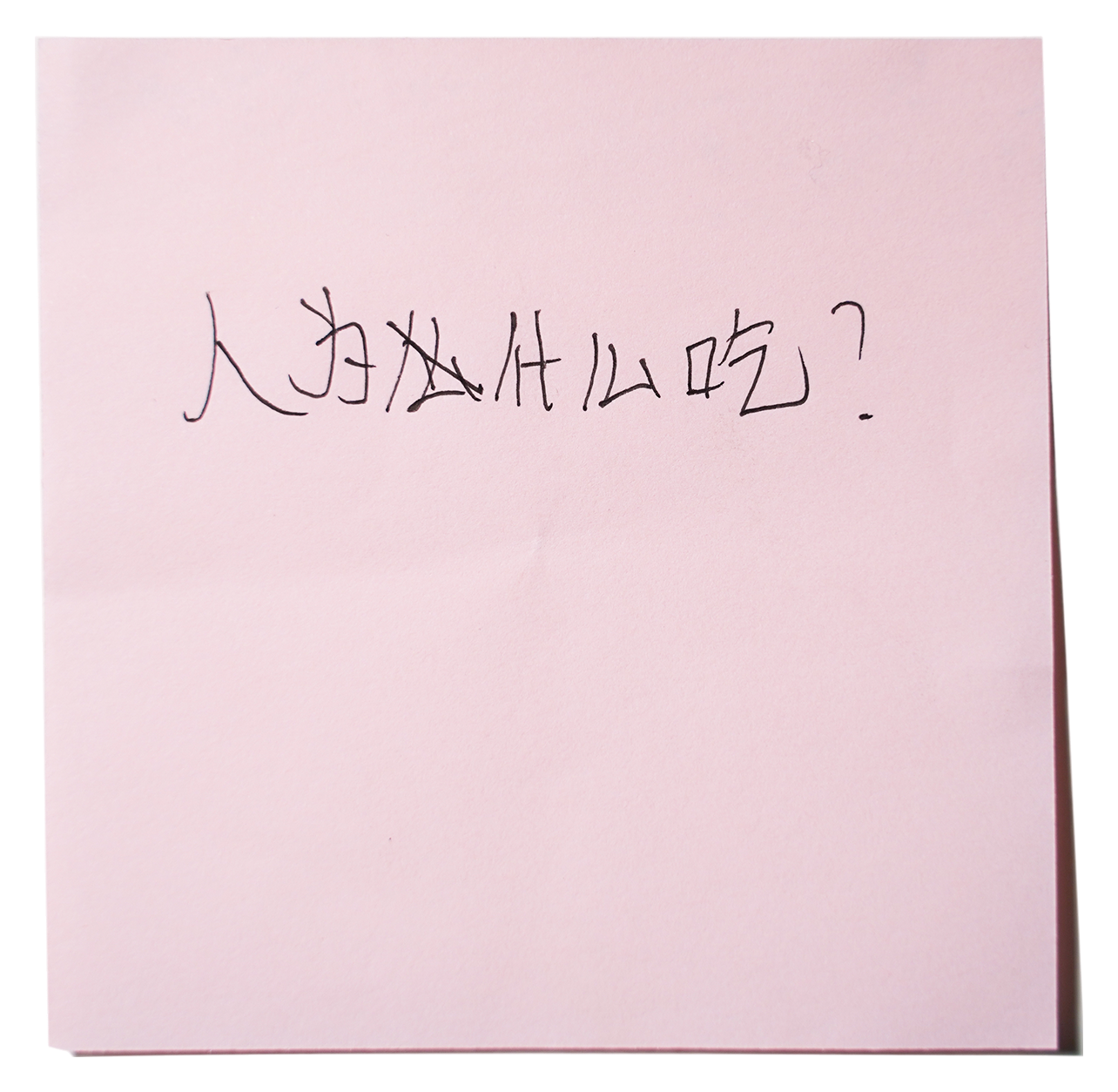
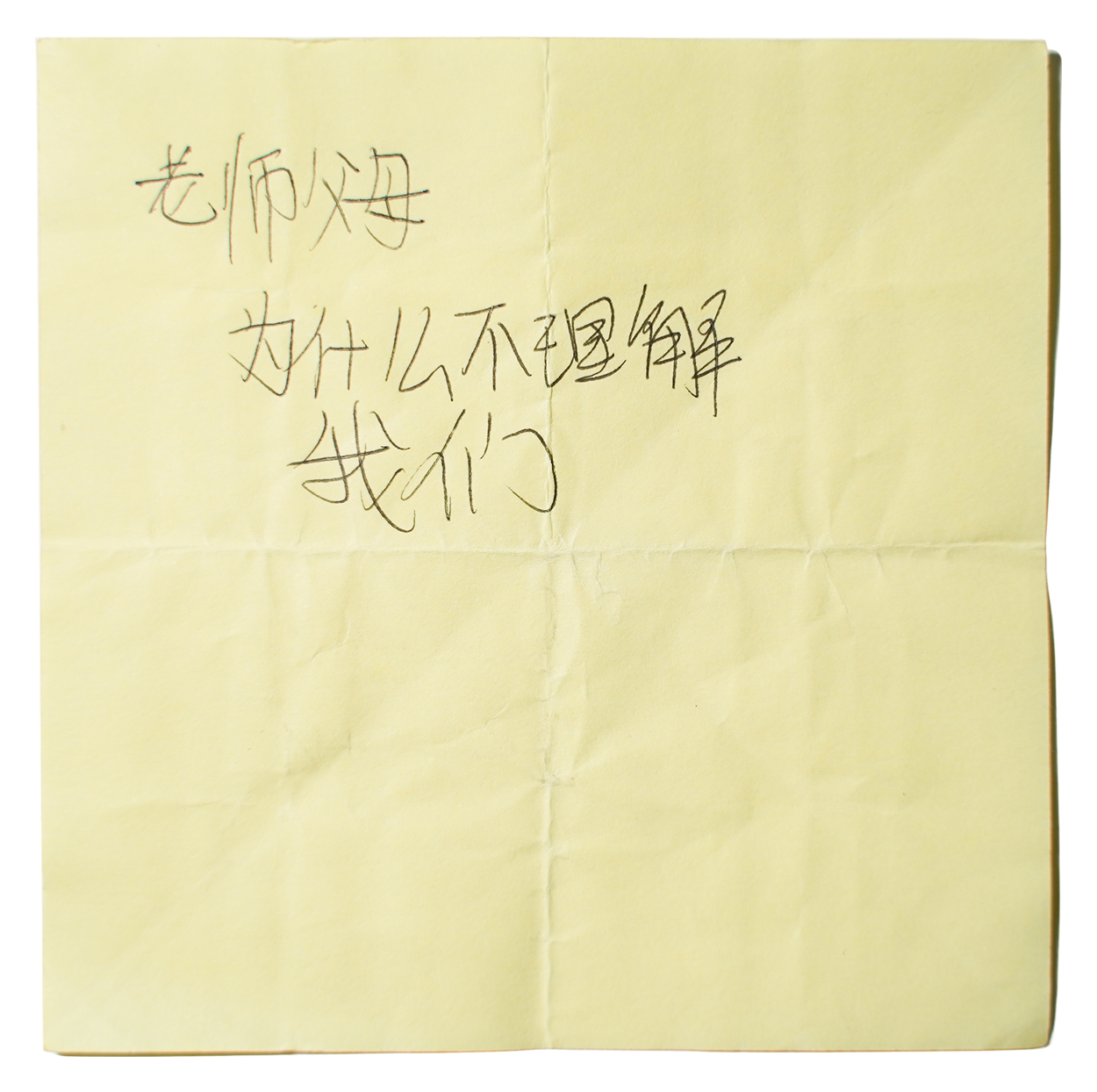
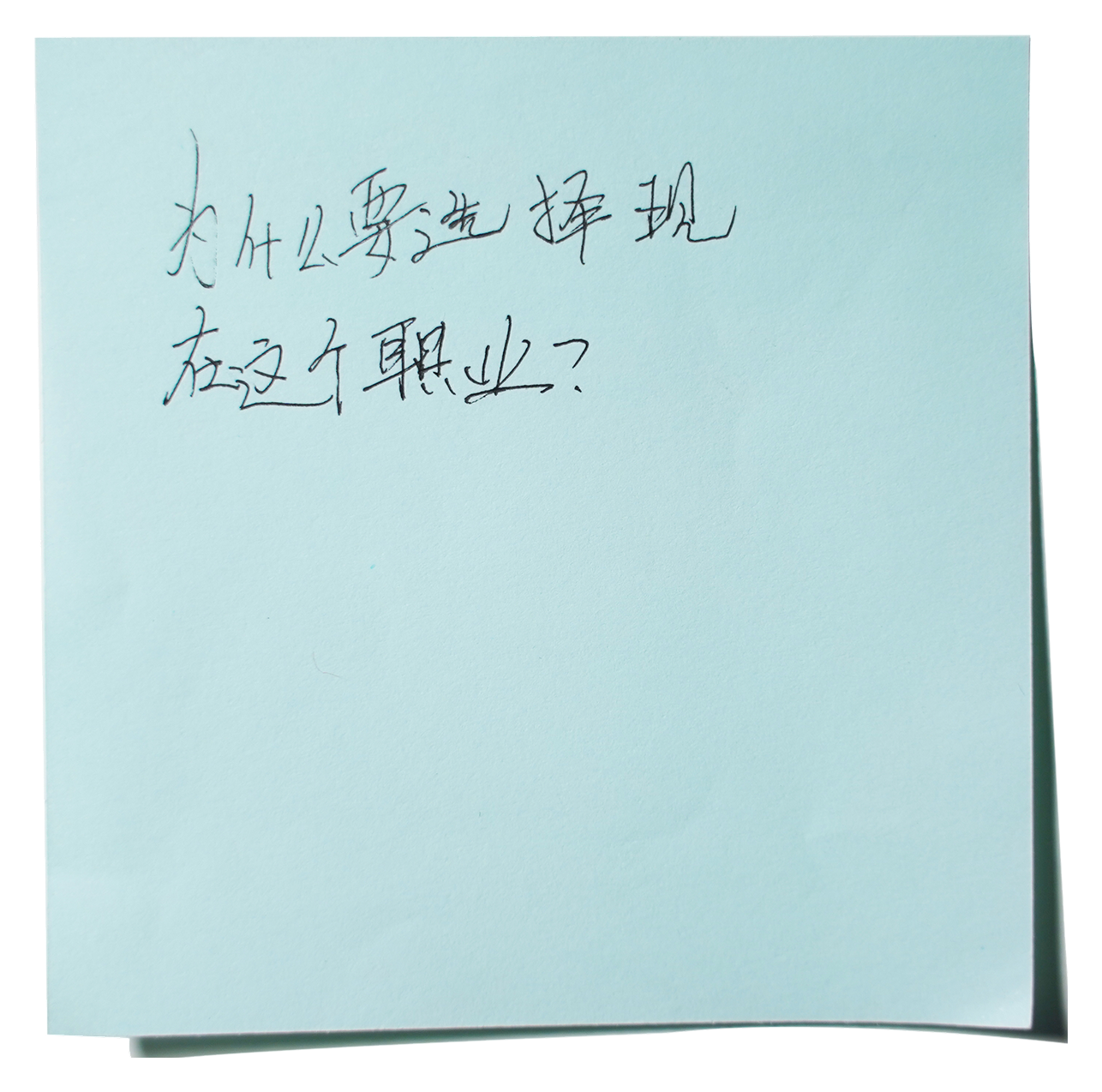
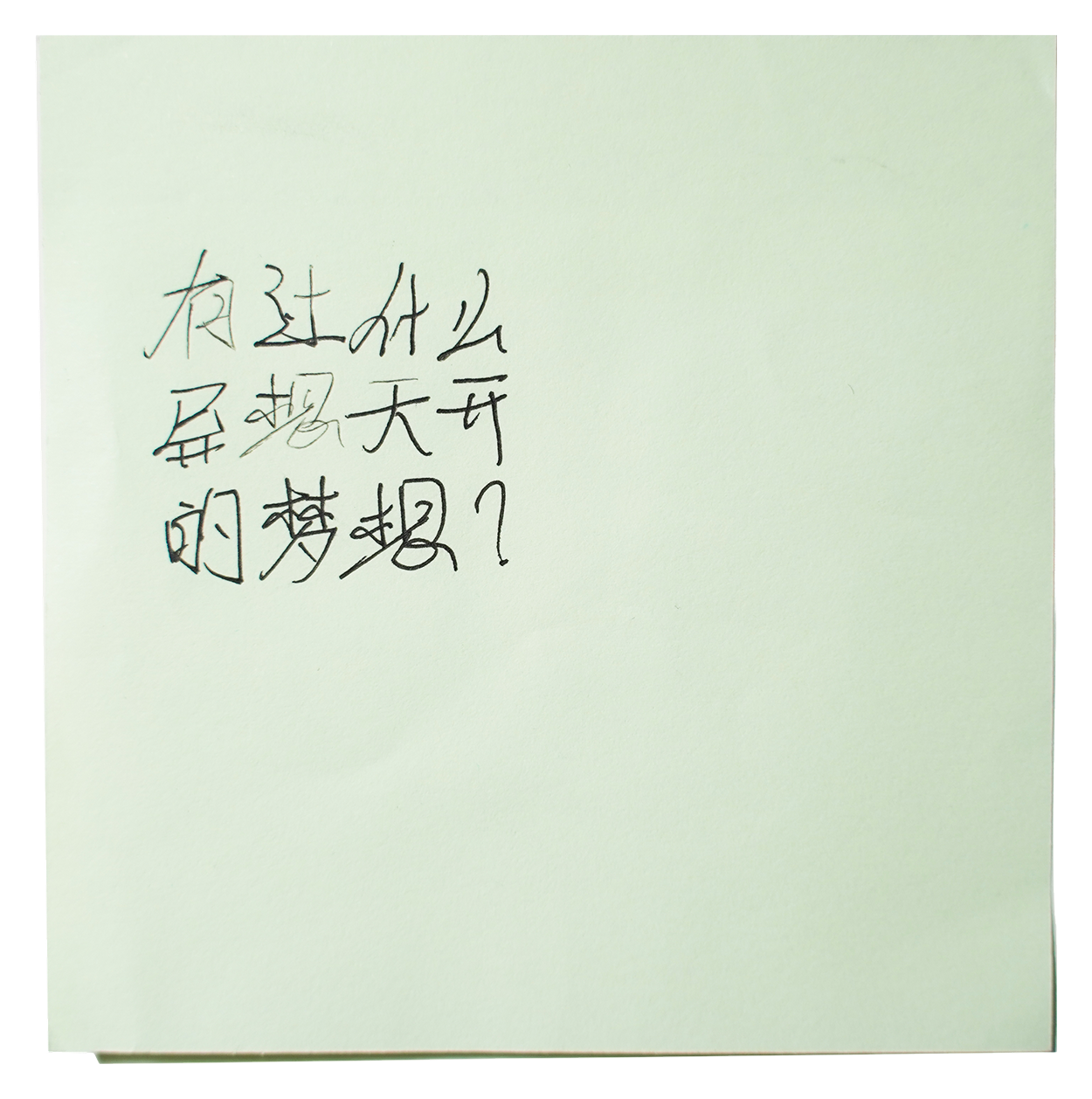
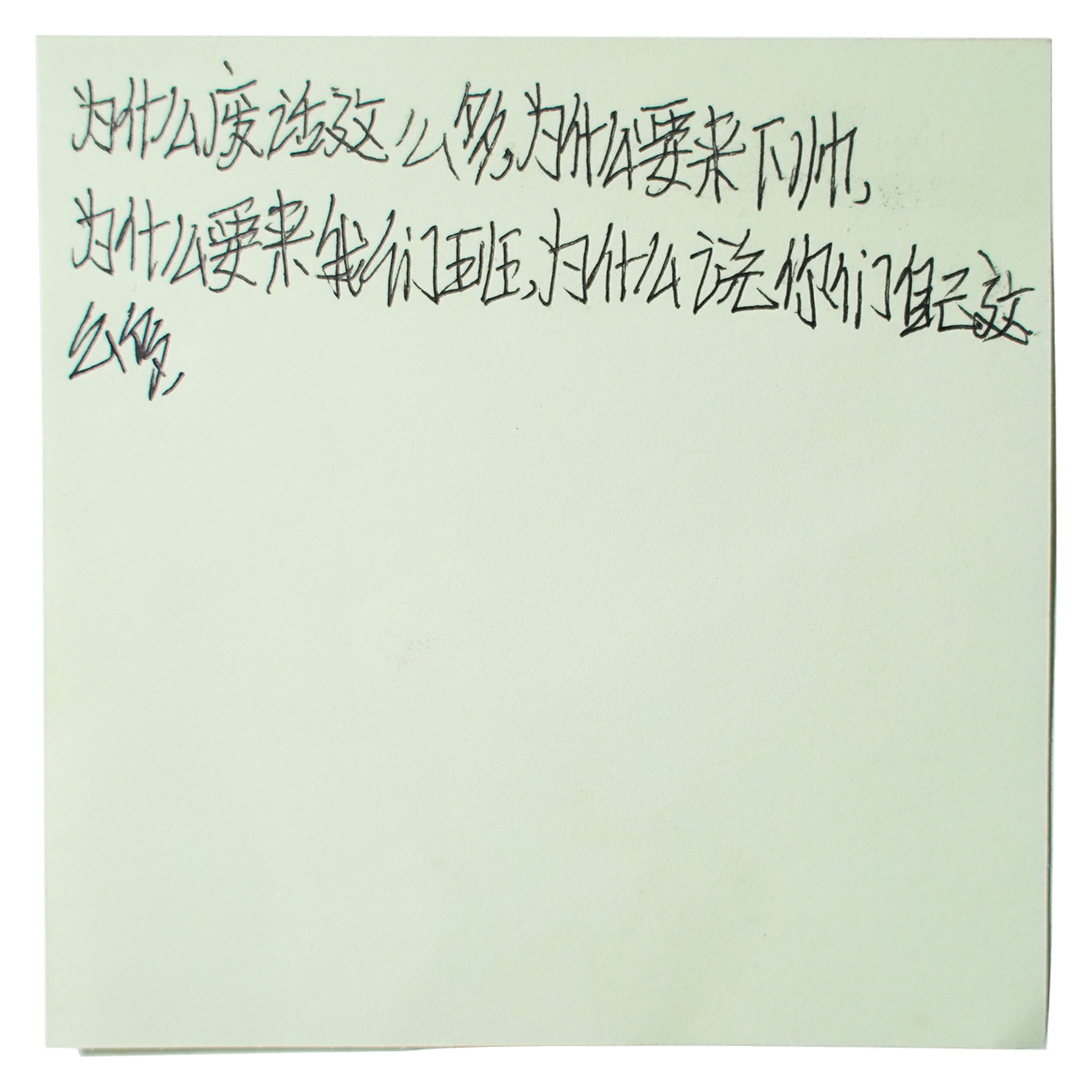
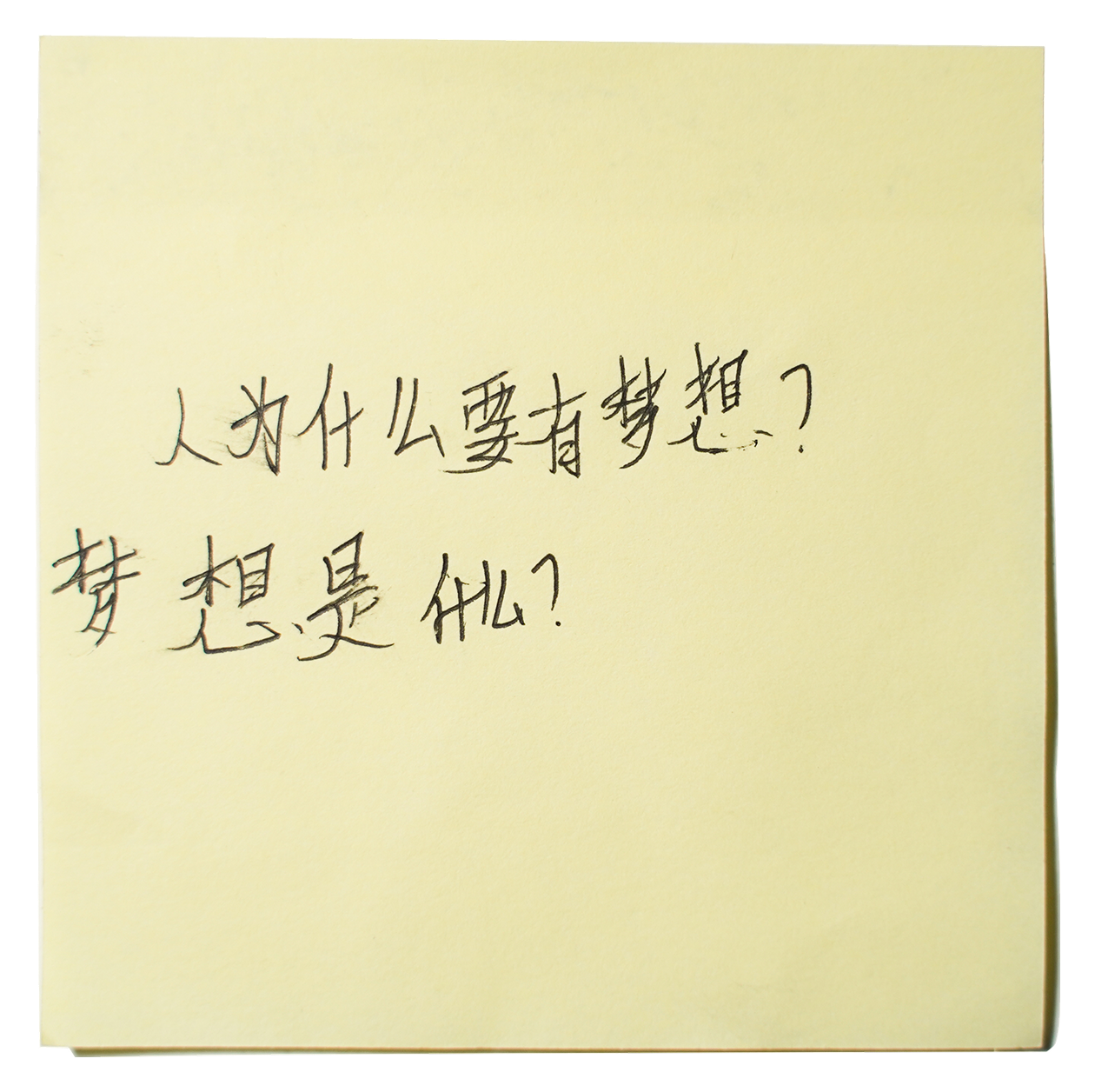
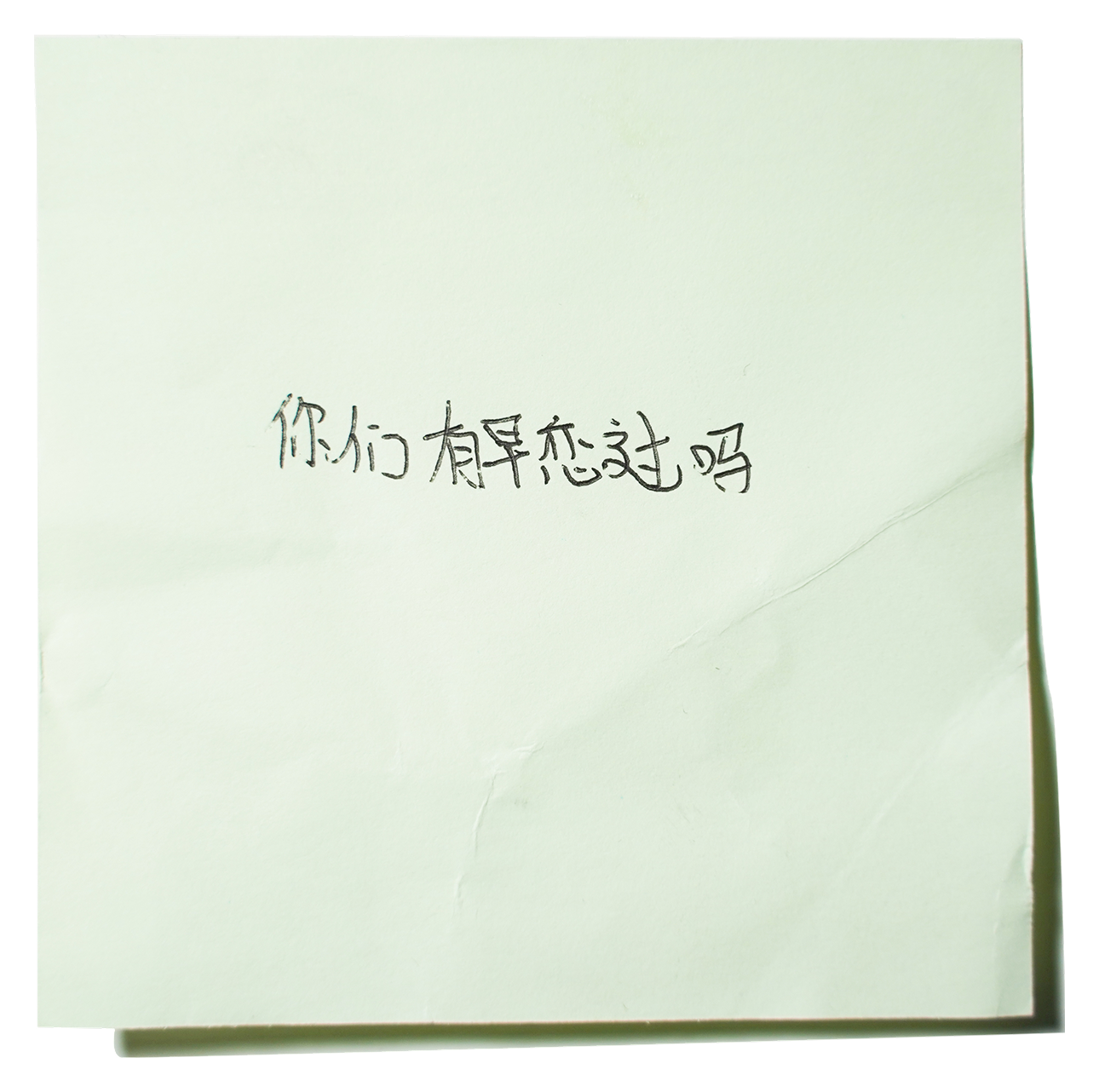
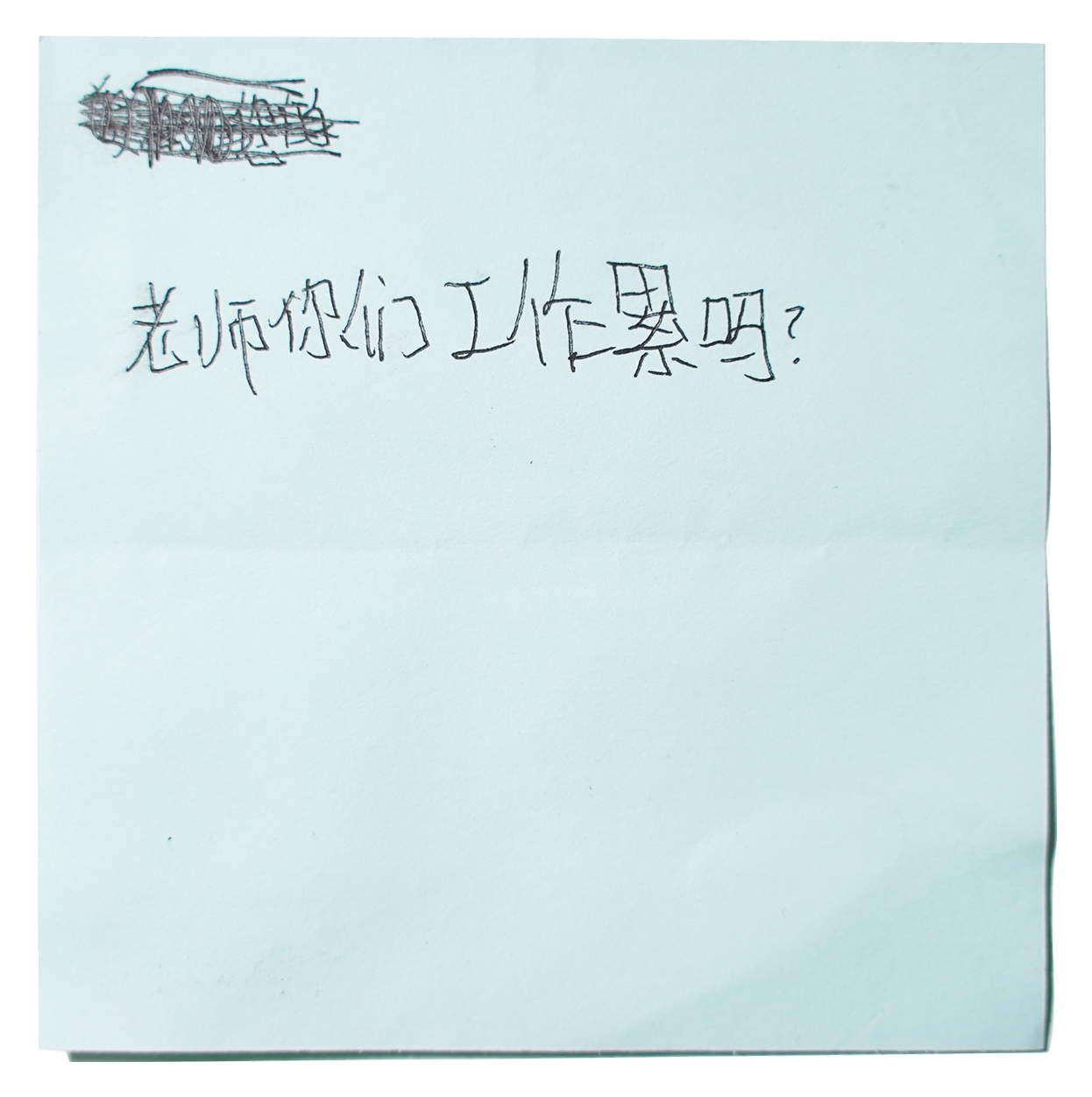
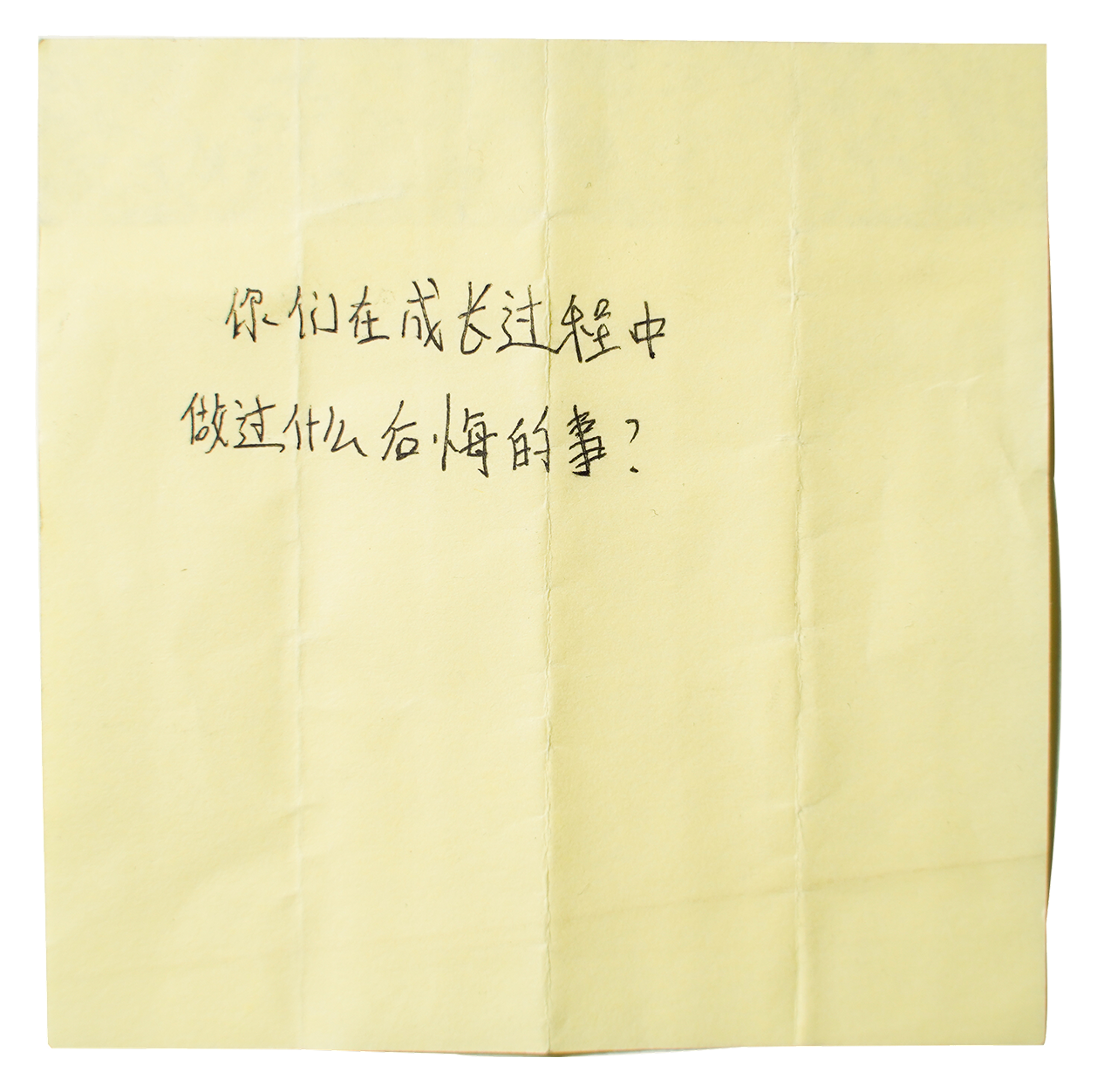
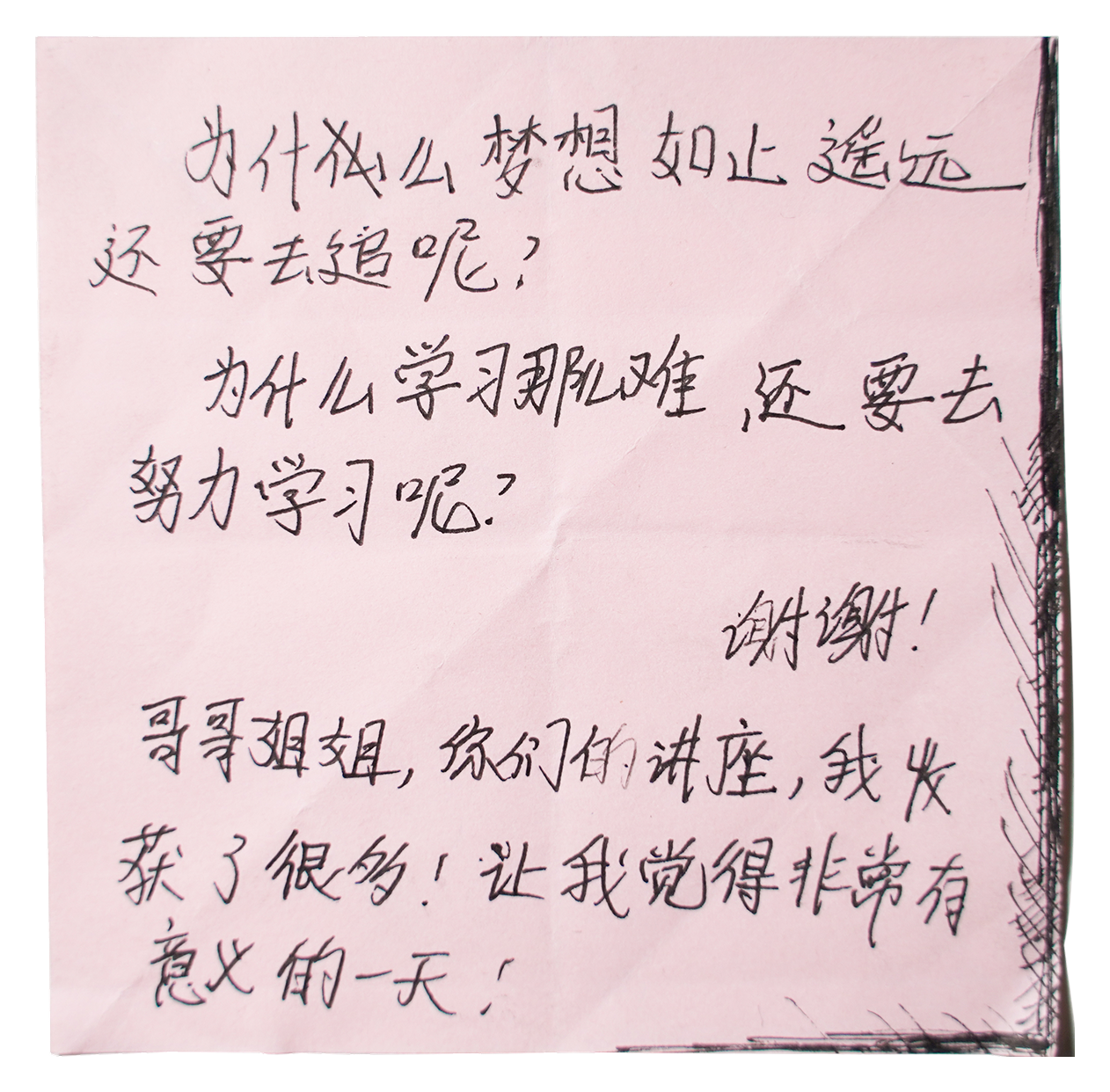
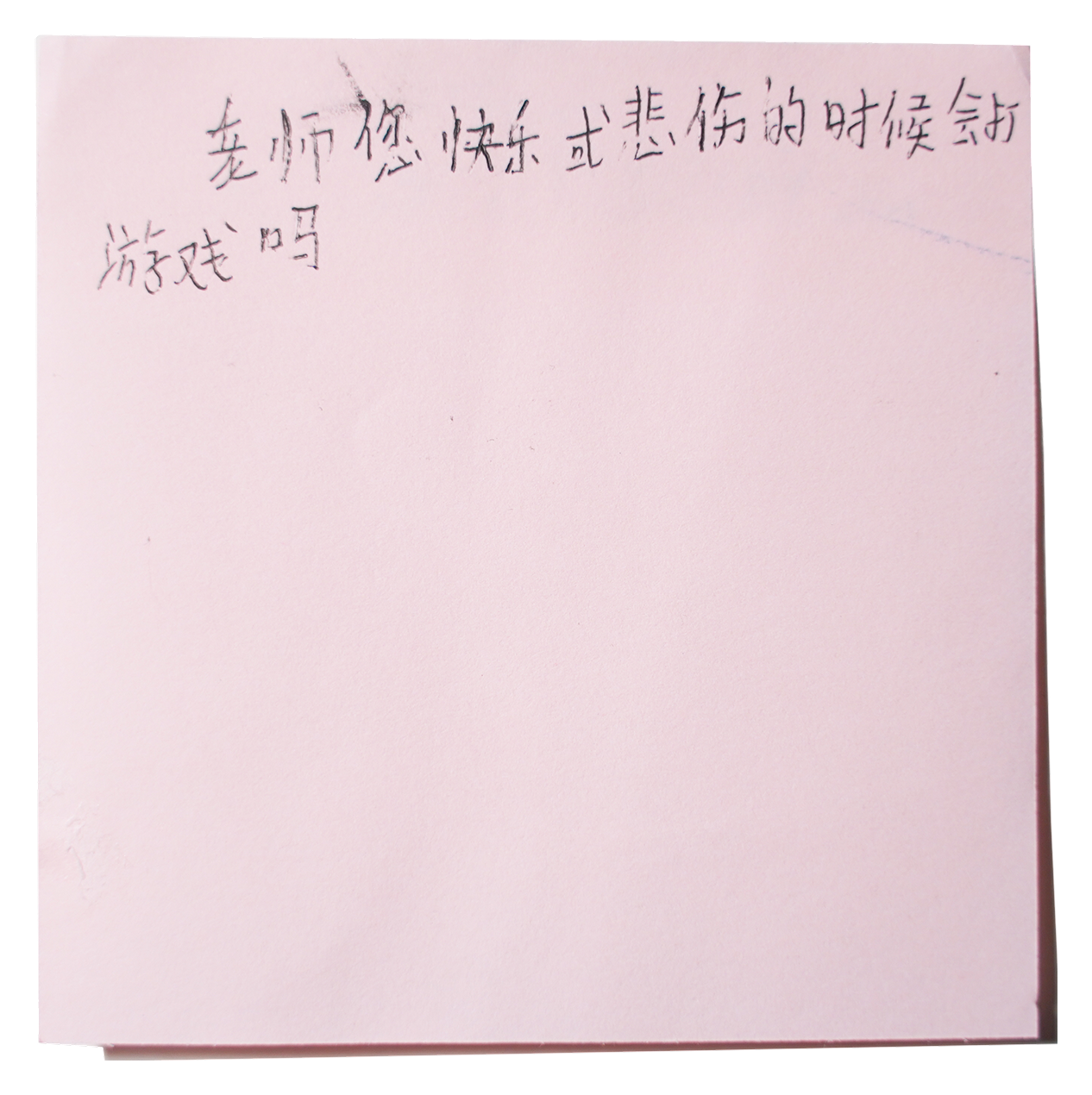
At the end of the session, the students wrote questions on slips of paper. One asked: “The world is so big and I want to see it, but my wallet is so small that I cannot go anywhere. What should I do?” Another wrote: “Why did you come here just to say so many unnecessary things and talk so much about your own lives?” Their questions disrupted the assumed roles of giver and recipient, forcing us to reconsider what our presence actually offered.
Questions from Left-Behind Children consists of these handwritten questions by twelve- and thirteen-year-old students, together with related photographs. The work examines the distance between material assistance and lived social conditions. It also questions narratives that reduce poverty to individual motivation or present education as a sufficient answer to structural inequality. Modern school buildings can be constructed relatively quickly, while parental absence, migration, regional disparity, and unequal access to opportunity remain far more difficult to change.
The title refers both to the social issues faced by left-behind children and to the questions they directed towards us—questions that most of us were unable to answer.